Trying to choose between two great looks in Mountains Edge? You’re not alone. In 89139, you’ll see both sleek Desert Contemporary homes and warm, Classic Southwest designs on the same streets. Each style shapes how your home feels day to day, what it costs to cool and maintain, and how easy it is to personalize within community guidelines. In this guide, you’ll get a clear, side-by-side breakdown of both styles, plus maintenance tips, energy upgrades, and a simple checklist to help you decide. Let’s dive in.
Desert Contemporary at a glance
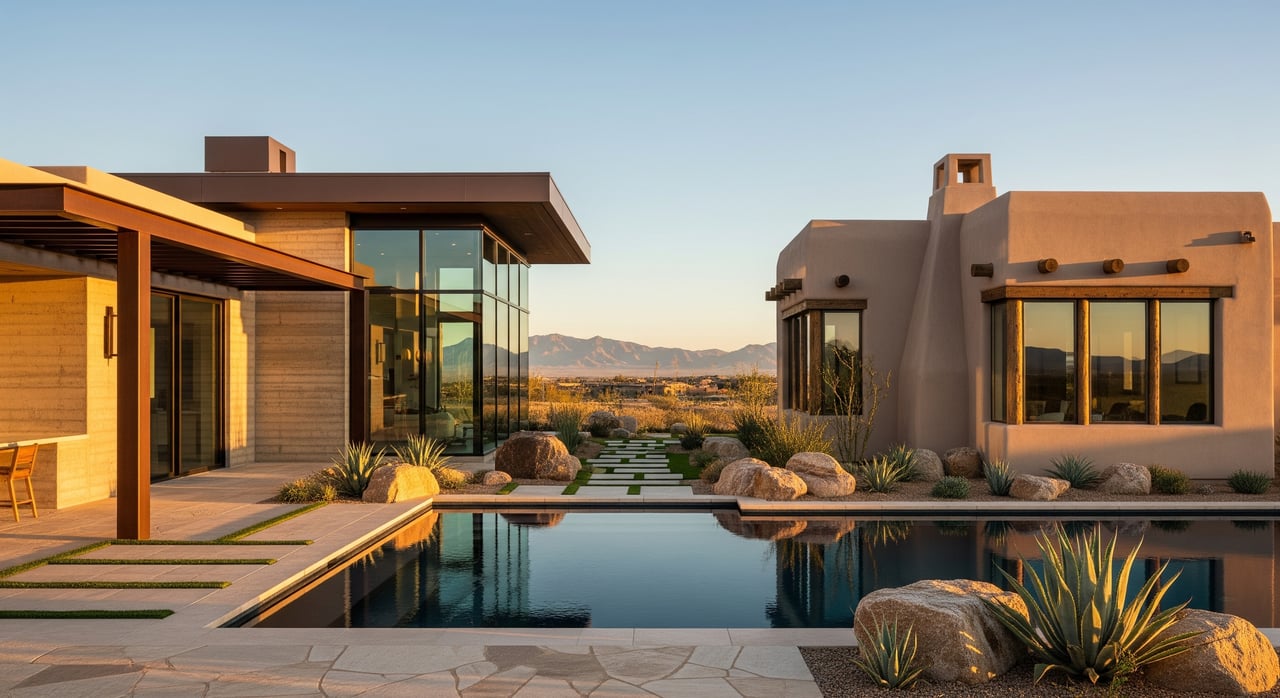
Desert Contemporary homes lean into clean lines and simple forms. You’ll often see flat or low-slope rooflines, large sliding glass doors, and a strong indoor-outdoor connection with covered patios and courtyards. Finishes tend to be smooth or fine-texture stucco in neutral tones, paired with stone veneer, concrete or large-format pavers, and metal accents.
Landscaping skews modern xeriscape. Think gravel or decomposed granite, boulders, grouped drought-tolerant plantings, and minimal turf. This style resonates if you want daylight, openness, and a modern look that flows easily into the backyard.
Resale appeal is strong among buyers seeking updated, contemporary finishes. Just know that larger glass areas can increase cooling loads unless mitigated with the right glazing and shading.
Classic Southwest at a glance
Classic Southwest draws on Pueblo, Territorial, and Spanish influences. You’ll notice rounded corners, parapets or clipped rooflines, arches, and smaller grouped window openings. Details can include vigas, corbels, decorative tile, and wrought iron accents.
Material choices include textured stucco in warm adobe or terra-cotta tones, and clay or concrete barrel-style roof tiles where pitched roofs are used. Outdoor areas often feature shaded portals and courtyards that feel enclosed and protected from the sun.
This style offers a strong regional sense of place. The thicker-wall feel and recessed windows help limit direct sun, which can support cooler interiors during hot months. Classic Southwest has long-standing market familiarity in the region, which supports broad buyer appeal.
Key tradeoffs in 89139
- Light and openness: Desert Contemporary prioritizes big openings and bright interiors. Classic Southwest trades some daylight for shade and privacy.
- Cooling and comfort: In our Mojave summers, Classic Southwest’s smaller, recessed windows can limit solar heat gain by design. Desert Contemporary can match that comfort with high-performance glazing, exterior shading, and smart orientation.
- Roof longevity and care: Clay or concrete tile roofs on Southwest homes often have long lifespans, while low-slope or flat roof details on contemporary designs require more regular inspection. Either way, flashing and drainage are critical in monsoon season.
- Maintenance visibility: Smooth, modern stucco can show dust and stains differently than textured finishes. Plan on periodic cleaning and proactive repaint or recoat cycles regardless of style.
- HOA and exterior changes: Mountains Edge neighborhoods use design standards. Roof types, visible materials, and color palettes can be limited. Always review CC&Rs and design guidelines before planning exterior changes.
Why climate matters in Mountains Edge
Las Vegas sits in the Mojave Desert, with long, hot summers that often top 100°F, very low annual rainfall, high sun exposure, and big day-night temperature swings. Cooling is your dominant seasonal energy use. Exterior finishes need to handle intense sun and occasional storm debris, while drought-tolerant landscaping helps control water bills. These realities shape both how each style performs and where you’ll get the biggest comfort and cost savings.
Maintenance in the Mojave
Exterior stucco and stone
Stucco is common to both styles. Expect hairline cracking from thermal movement or settling, sun-driven fading, and occasional efflorescence near water intrusion points. Annual visual checks and spot repairs every 5 to 10 years can prevent larger fixes. Repainting or recoating often falls in the 10 to 15 year range depending on sun exposure and coating quality.
For stone veneer, check mortar or grout joints for movement and seal as needed to reduce staining.
Roof systems
- Clay or concrete tile roofs: Common on Classic Southwest homes. Tiles themselves can last 30 to 50 plus years. Routine attention focuses on cracked tiles, shifting, and flashing around penetrations and valleys.
- Low-slope or flat roof details: More common on Desert Contemporary homes. Inspect for ponding, membrane cracks, seam failures, and flashing integrity. Lifespans vary widely by system, roughly 10 to 30 years, so plan for regular checkups.
- Drainage readiness: Even in the desert, monsoon storms can be intense. Clean scuppers, gutters, and drains before and after the season.
Windows, shading, and large glass
Large sliding doors and floor-to-ceiling windows look great and feel airy, but they need care. Watch for seal failures on insulated glass units, hardware wear, and air infiltration at frames. Solar-control glazing, exterior shades, and retractable screens can protect interiors and lower cooling loads.
HVAC and airflow
Cooling drives energy use here. Central AC systems typically last 12 to 20 years with consistent service. Annual HVAC tune-ups, filter changes, and checking refrigerant charge and airflow keep systems efficient. If ducts run through hot attics, sealing and insulating them makes a major difference.
Irrigation and landscaping
Xeriscape reduces water use, but drip systems still need seasonal adjustments, leak checks, and filter cleaning. After monsoon events, clear debris from basins and valves. If you keep turf, expect higher maintenance and water costs. Local programs often support turf removal and water-smart design.
Pests, paint, and finishes
Termites can be an issue around irrigation or shaded wood elements. Schedule annual pest checks where landscaping meets the structure. UV is tough on exterior coatings, so invest in quality paint and watch for chalking or color fade.
Buyer maintenance checklist
- Ask for recent HVAC service records and roof inspection dates or age.
- Confirm stucco repair history and whether any structural movement has been evaluated.
- Request the irrigation system schematic, seasonal settings, and last service date.
- Review HOA and CC&Rs for permitted exterior materials, colors, roof types, and solar or shading additions.
Energy comfort and costs
High-impact upgrades for our climate
- Solar photovoltaic: Southern Nevada’s strong solar resource can significantly cut electricity bills. Federal residential clean energy tax credits may apply, and utility interconnection and export rules should be reviewed with qualified installers and NV Energy.
- High-efficiency air conditioning: Upgrading to higher-SEER equipment, right-sizing, and ensuring proper refrigerant charge and airflow reduce summer costs.
- Attic insulation and duct sealing: These are among the most cost-effective improvements for hot, dry climates.
- Cool roof strategies: Light roof colors or compatible reflective coatings reduce heat transfer to the attic. This can help both low-slope membranes and some tile systems.
- Window and shading choices: Low-E glass with appropriate solar heat gain coefficients on west and south exposures is key. Exterior shading like awnings, trellises, fixed overhangs, or solar screens is more effective than interior-only shades.
- Smart thermostats and zoning: Programmed schedules and zone control limit cooling in unused rooms.
Style-specific energy notes
- Desert Contemporary: Large glazing is a feature. Pair it with low-E double-pane glass, exterior shading, and well-designed overhangs. Motorized shades can preserve views while cutting afternoon heat.
- Classic Southwest: Recessed windows and the thick-wall aesthetic provide passive shading. Clay tile roofs offer thermal mass and a ventilated cavity when installed with battens, which can moderate heat transfer. Roof and wall colors still influence how much heat is absorbed.
Incentives and local programs to check
- Federal tax credits for residential clean energy improvements.
- NV Energy rebates or incentives for efficient HVAC, water heaters, and home energy upgrades.
- Southern Nevada Water Authority programs for turf removal and water-smart landscaping.
Program details change, so verify current offerings and eligibility before you plan your upgrades.
Landscaping looks that save water
- Desert Contemporary: Keep it simple and structured. Use gravel or decomposed granite, boulders, and grouped drought-tolerant plants. Linear drip lines and raised planters complement the modern look.
- Classic Southwest: Courtyard gardens with native shrubs, planters, and shade structures feel authentic. Mesquite or palo verde accents deliver shade with minimal water needs.
Either way, choose plants suited to the Mojave, use efficient drip irrigation, and tune controllers seasonally.
How to choose your fit
- Start with light: Do you prefer bright, open interiors or cooler, shaded rooms during peak summer?
- Look at the roof: Ask about roof type, age, and maintenance. Plan for inspections and budget for the next lifecycle step.
- Evaluate glazing: For big glass, ask about the window specs and shading. For smaller windows, look at exterior overhangs and courtyard shade.
- Confirm HOA rules: Check palettes, roof allowances, and what is permitted for solar, shades, and visible materials before you plan changes.
- Prioritize upgrades: No matter the style, attic insulation, duct sealing, right-sized AC, and smart thermostats pay off in our climate.
If you want help matching style, maintenance expectations, and energy strategy to your lifestyle and budget, I’m here to make it simple.
Ready to explore Mountains Edge homes and weigh these tradeoffs in person? Reach out to Jennifer Littlefield for local guidance, from finding the right floor plan to coordinating inspections, energy upgrades, and HOA reviews.
FAQs
How do the two styles affect daylight and cooling in 89139?
- Desert Contemporary brings more daylight with larger glass but needs quality glazing and exterior shading. Classic Southwest uses smaller, recessed windows for built-in shade and cooler interiors.
Which style typically costs more to maintain in the Mojave?
- Costs depend on materials and age. Tile roofs on Southwest homes can last decades with periodic tile and flashing care, while low-slope membranes on some Contemporary homes need regular inspections. Large glass areas require seal and hardware upkeep.
What energy upgrades offer the best payoff in Las Vegas?
- High-efficiency AC, attic insulation, duct sealing, low-E windows with the right SHGC, exterior shading, cool roof options, and smart thermostats deliver strong comfort and savings.
How do HOA rules in Mountains Edge impact exterior changes?
- CC&Rs and design guidelines may limit roof types, colors, and visible materials, and set parameters for solar panels and shading devices. Review your specific neighborhood rules before planning changes.
What water-wise landscaping fits each style?
- Modern xeriscape with gravel, boulders, and grouped plantings fits Desert Contemporary. Courtyard gardens with native shrubs, planters, and integrated shade structures suit Classic Southwest.
What should I ask for during inspections in 89139?
- Request HVAC service records, roof age and inspection notes, stucco repair history, insulated glass condition, duct sealing status, irrigation schematics and settings, and any HOA approvals for past exterior work.